




Automotive AI platform
The API layer for every vehicle workflow.
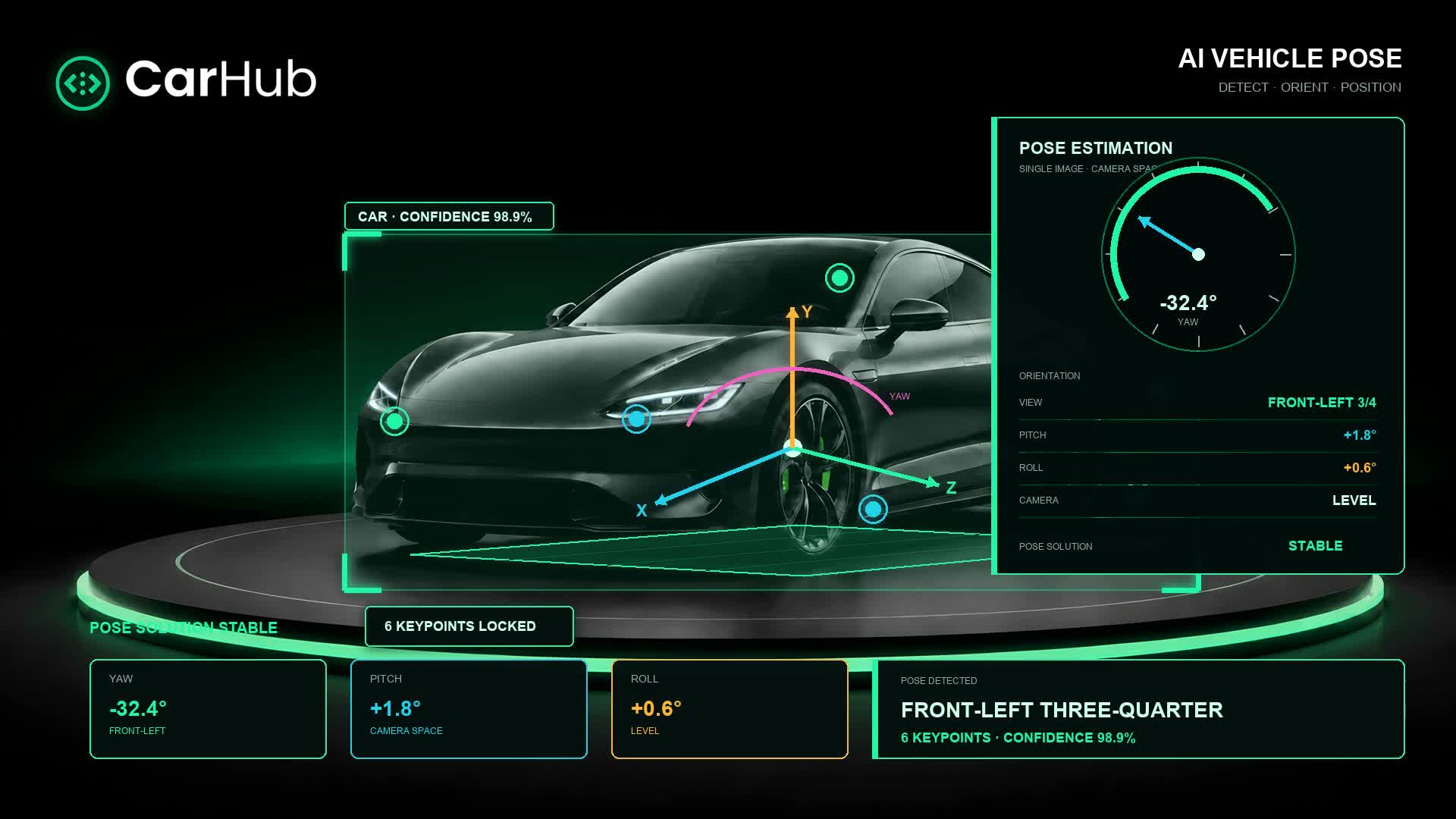
Start with one model endpoint. Add capture components and trusted vehicle data only where your product needs them—all through one integration, whether you integrate directly or build through CarHub Apps.
- 23 endpoints
- 4 SDKs SDK components
- 9 data domains
The integration surface
Models at the center. The rest, when you need it.
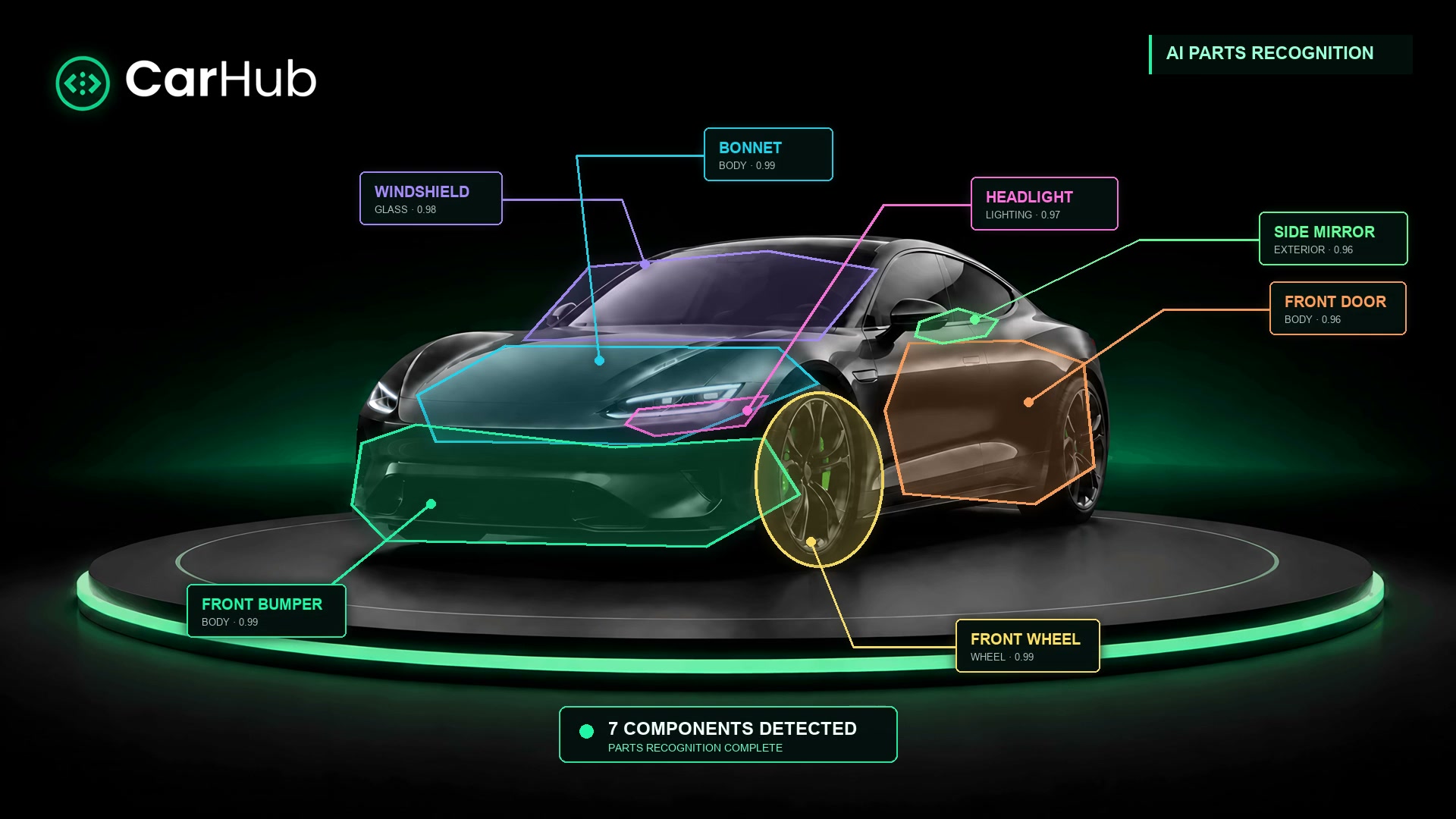
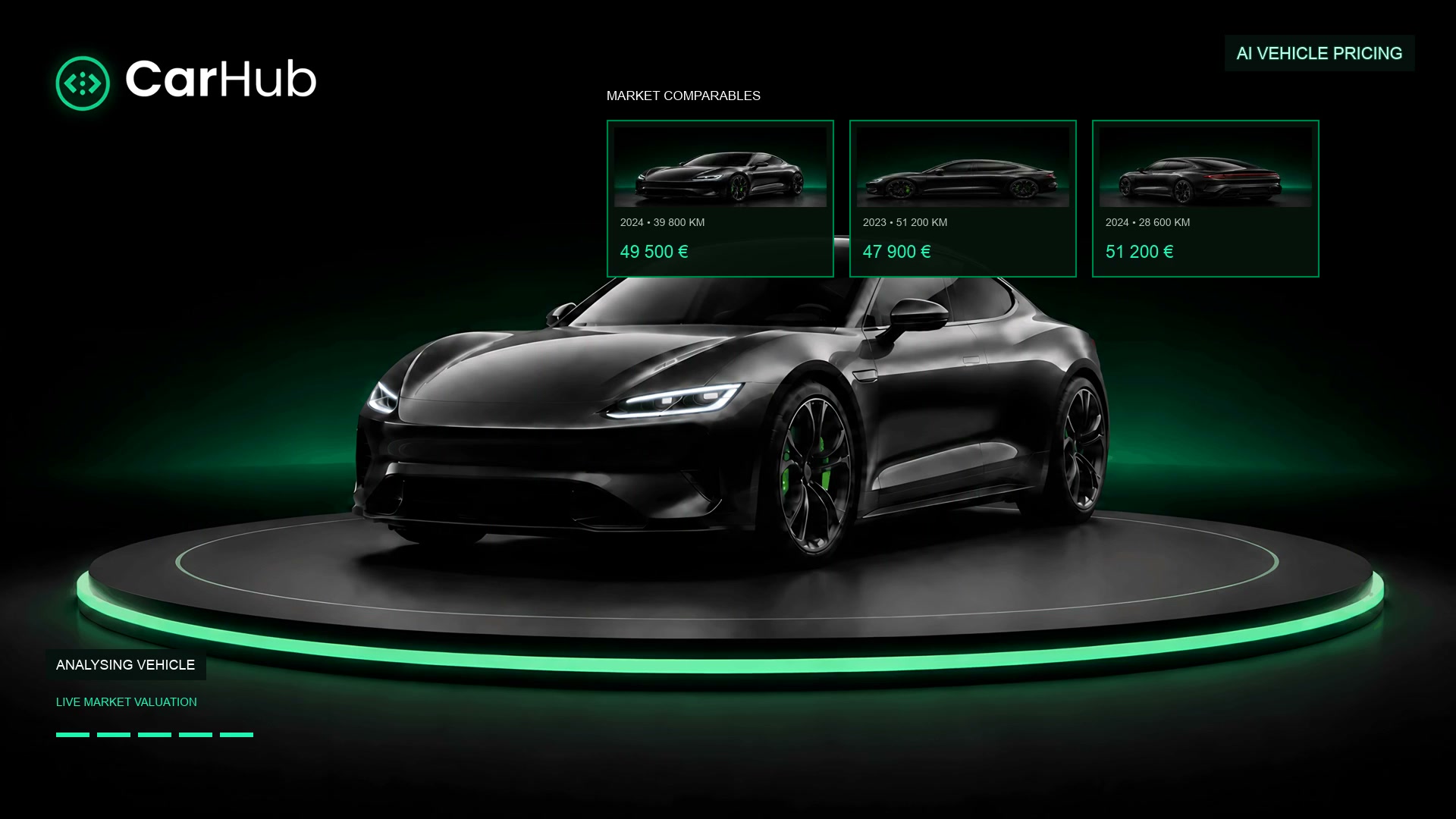
CarHub is modular by design: the model endpoint can stand alone, while the surrounding layers shorten the path from a vehicle capture to a customer-facing result.
 01
01Layer 1 · Components
Components
Four SDKs — player, capture, review, report — shipped for Web, iOS and Android, so nobody on your team writes a WebGL viewer or a guided-capture camera flow.
 02
02Layer 2 · Models
Models
Each endpoint is priced and rate-limited on its own. Call one in isolation, or chain the set — nothing assumes you adopted the others.
 03
03Layer 3 · Data
Data
Sourced from supported vehicle-data providers, then normalised into one schema behind the same key. You integrate one contract instead of provider-specific formats.
One predictable contract
Build once around the job, then call the model you need.
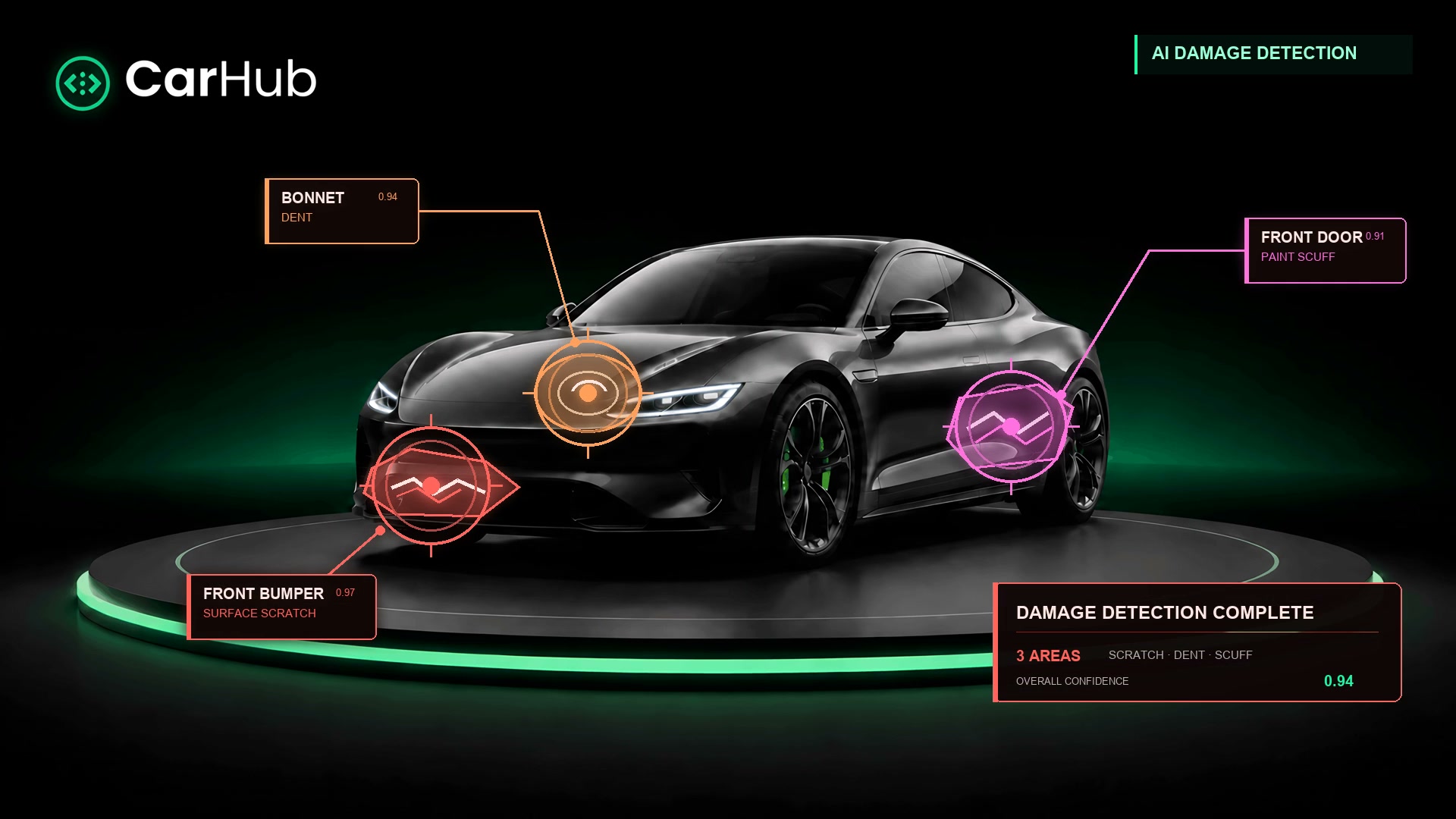
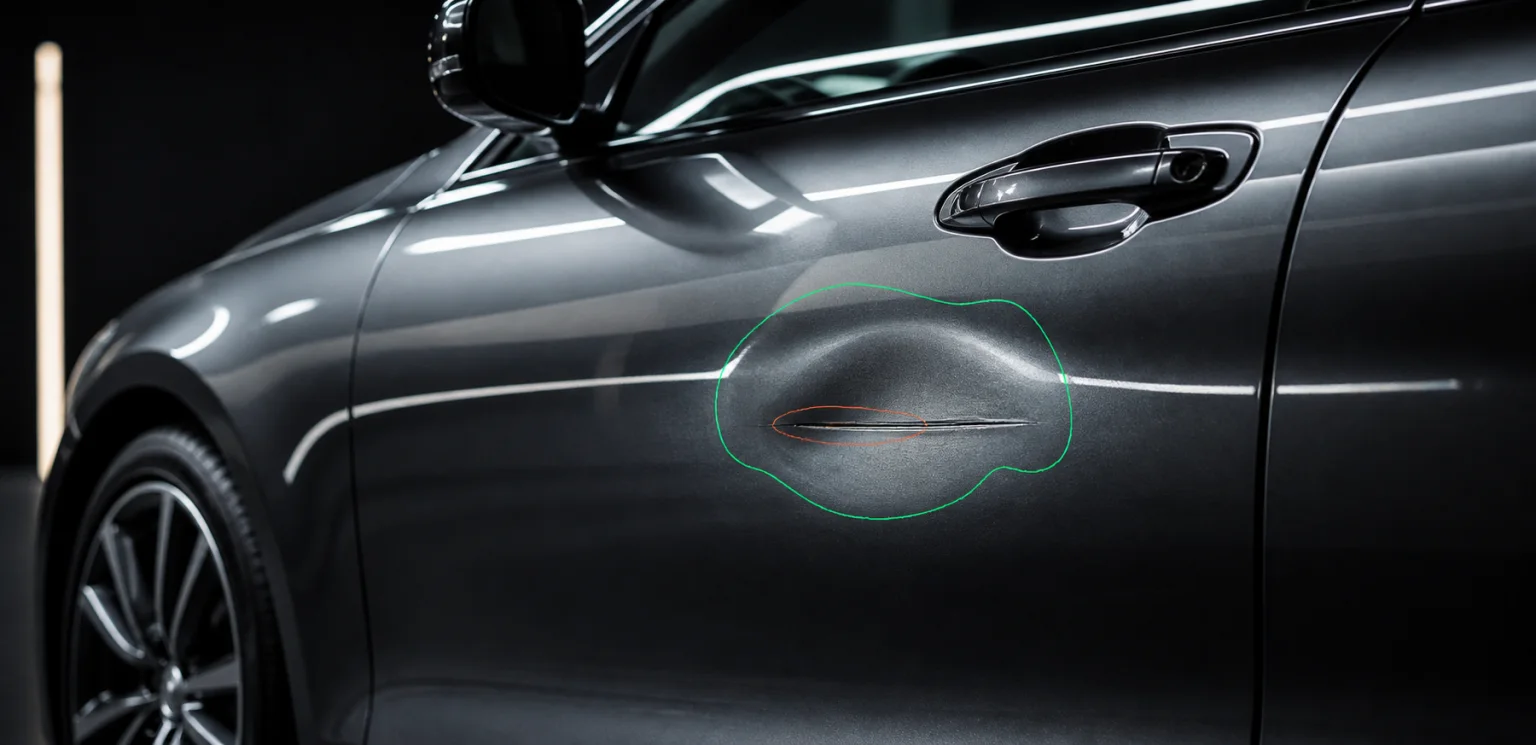
Every long-running call returns a job. Poll it or receive the webhook; your product gets one way to follow inference, whether it is reading a VIN, detecting damage or rendering a listing image.
See the model contractPOST /v1/damage/detect
send the vehicle asset
202 job_01HW…
track one shared status contract
DONE structured output
write evidence into your workflow
Start small
One endpoint is enough to begin.
Use the API on the vehicle workflow you already own. The rest of the platform is ready when your product needs it.